
How Sunspots Affect Radio Propagation:
Understanding the Sun's Influence on Your Radio
Amateur Radio • Shortwave Listening • Solar Activity • Radio Science
Have you ever tuned across the shortwave bands and noticed that some days you can hear stations thousands of miles away, while on other days those same frequencies seem almost completely silent?
One of the biggest factors influencing long-distance radio communication is our Sun.
Sunspots, solar flares, and other forms of solar activity have a tremendous effect on Earth's ionosphere, the region of the upper atmosphere that makes much of long-distance HF radio communication possible.
1. What Are Sunspots?
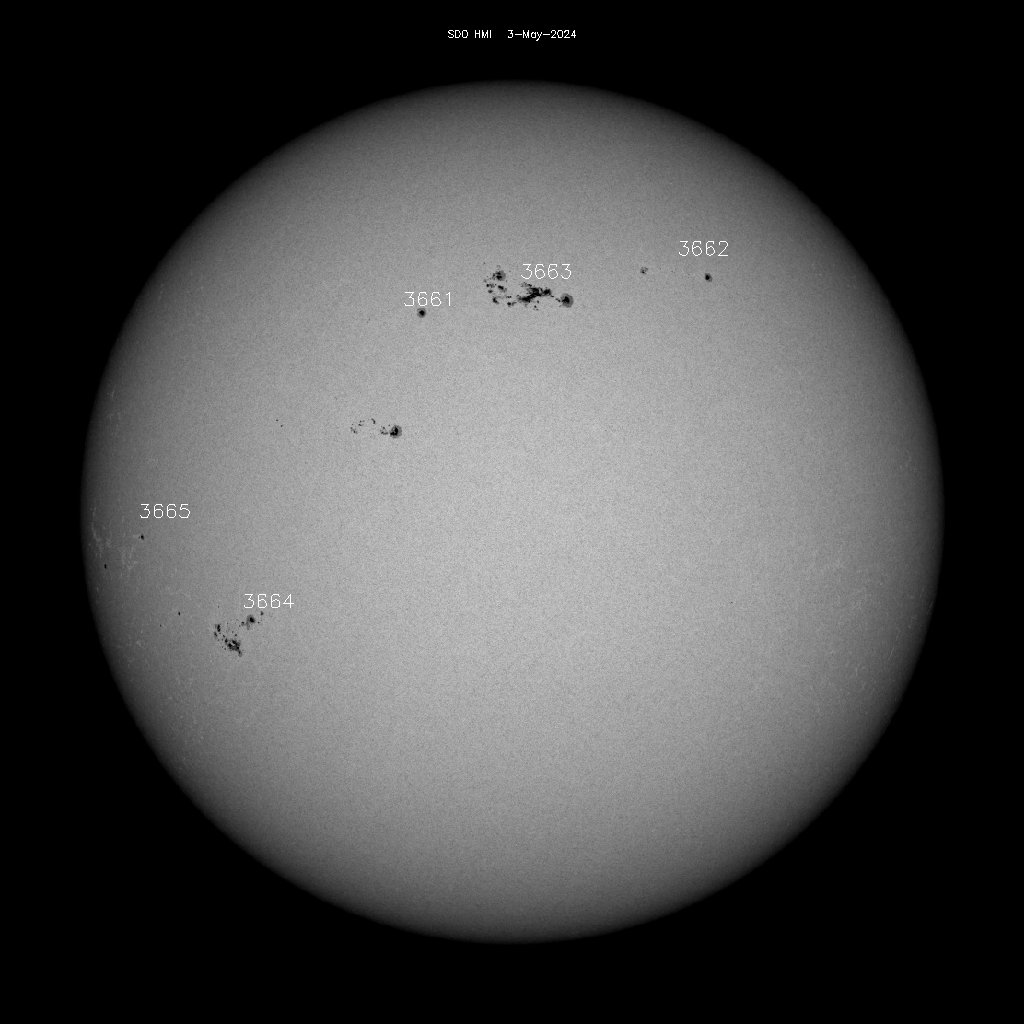
Sunspots are cooler, magnetically active regions on the Sun. Image: SOHO/NASA.
Sunspots are relatively dark, cooler areas on the Sun's visible surface caused by intense magnetic fields. Although they appear dark compared with the surrounding solar surface, they are still extremely hot.
The number of sunspots rises and falls in a repeating cycle that averages approximately 11 years. During periods of high sunspot activity, the Sun generally produces more ultraviolet radiation that affects Earth's ionosphere.
This increased solar activity can make long-distance HF radio communication possible on frequencies that might otherwise be difficult to use.
2. How the Ionosphere Helps Radio Signals Travel

Radio waves are refracted through the ionosphere and can return to Earth far beyond the horizon. Image: NASA Scientific Visualization Studio.
The ionosphere is a region of Earth's upper atmosphere containing electrically charged particles called ions and free electrons.
When certain radio waves enter the ionosphere, they are gradually refracted, allowing them to return toward Earth's surface. This makes it possible for radio signals to travel far beyond the visual horizon.
A signal can make multiple hops between Earth and the ionosphere, sometimes traveling thousands of miles. This is commonly called skywave propagation.
Without the ionosphere, many of the long-distance HF communications we enjoy would be much more difficult.
3. What Happens When Sunspot Numbers Increase?
During periods of increased solar activity, greater amounts of solar ultraviolet and extreme ultraviolet radiation help increase ionization in the ionosphere, particularly in the F region.
This generally improves propagation on the higher HF frequencies.
For amateur radio operators, this can mean better opportunities for contacts on:
- 10 meters (28 MHz)
- 12 meters (24 MHz)
- 15 meters (21 MHz)
- 17 meters (18 MHz)
- 20 meters (14 MHz)
These bands can sometimes open up to distant parts of the world when solar conditions are favorable.
4. When the Sun Becomes a Problem
More solar activity isn't always good news for radio operators.
Solar flares
Solar flares release bursts of X-ray and ultraviolet radiation. When these reach Earth, they can rapidly increase ionization in the lower ionosphere, particularly the D layer.
This can absorb HF radio signals, sometimes causing a sudden radio blackout on the sunlit side of Earth.
Geomagnetic storms
Coronal mass ejections (CMEs) can send enormous clouds of charged particles toward Earth. When these interact with Earth's magnetic field, they can disturb the ionosphere.
The result can be fading signals, unusual propagation, or even the loss of long-distance communications for a period of time.
See NASA's photograph of a strong solar flare.
5. Which Radio Bands Benefit From Solar Activity?
Here's a simplified guide to how different HF bands tend to behave:
| Amateur Band | General Characteristics |
|---|---|
| 10 meters | Excellent opportunities during high solar activity |
| 12 meters | Benefits greatly from increased solar activity |
| 15 meters | Often very good during active solar conditions |
| 17 meters | Frequently provides excellent DX opportunities |
| 20 meters | Reliable long-distance band across many conditions |
| 40 meters | Often useful during lower solar activity and at night |
| 80 meters | Particularly useful for nighttime regional and long-distance communication |
These are general tendencies, not fixed rules. Time of day, season, location, geomagnetic conditions, and atmospheric absorption all influence actual propagation.
6. How Can You Monitor Solar Activity?
If you enjoy amateur radio or shortwave listening, keeping an eye on solar conditions can help you decide which frequencies are worth monitoring.
Here are three useful resources:
- NOAA Space Weather Prediction Center: www.swpc.noaa.gov — Solar flares, geomagnetic storms, and space weather forecasts.
- SolarHam: www.solarham.com — A useful resource for amateur radio operators tracking solar conditions and HF propagation.
- HamQSL Solar-Terrestrial Data: www.hamqsl.com/solar.html — Solar indices and HF propagation information in an easy-to-read format.
Some important measurements to watch include:
- Sunspot Number (SSN): An indication of solar activity.
- Solar Flux Index (SFI): A measurement of solar radio emissions at 10.7 cm, commonly used as an indicator of solar activity.
- K-index: Measures disturbances in Earth's magnetic field.
- A-index: Indicates longer-term geomagnetic activity.
Generally, higher SFI and lower K-index values are favorable for many HF propagation conditions.
The Bottom Line
The Sun plays an enormous role in how well radio signals travel around the world.
When solar activity is favorable, frequencies that normally seem quiet can suddenly come alive with stations from distant countries. When solar storms occur, those same bands can become almost unusable.
For amateur radio operators and shortwave listeners, understanding sunspots and solar conditions can make the difference between hearing nothing and experiencing some remarkable DX reception.
The next time you hear a station thousands of miles away, remember: you may have the Sun to thank for bringing that signal to your radio!
Image and information credits: NASA, NASA Scientific Visualization Studio, and SOHO. Solar and ionosphere images are credited to their respective organizations. Additional educational resources are linked throughout this article.
Suggested labels: Amateur Radio, Shortwave Radio, Radio Propagation, Sunspots, Solar Cycle, Ionosphere, HF Communications, Space Weather

No comments:
Post a Comment